Working as an alcoholic beverage server in the hospitality industry means more than simply pouring drinks. As a server, you play a crucial role in customer safety, community well-being and legal compliance. A core concept you need to understand is blood alcohol concentration (BAC). This includes how it’s measured, what it means for customers and how it impacts your professional responsibilities.
In this article, we will explore BAC in depth, discuss the science behind it, outline the laws and explain how spirit sellers and servers can prevent dangerous situations.
BAC is the measure of how much alcohol is present in a person’s bloodstream. It is expressed as a percentage of weight per volume. For example, a BAC of 0.08% means there are 0.08 grams of alcohol per 100 milliliters of blood.
This number is important because it reflects how alcohol affects a person’s ability to think, react and function normally. As BAC increases, judgment, balance and speech begin to change. At higher levels, mobility and decision-making abilities are severely compromised.
Alcohol can impact nearly every system. Even after a small amount has been consumed, there may be noticeable differences in coordination and mental processing.
Understanding how alcohol affects people differently helps servers recognize when a customer has reached an unsafe impairment level.
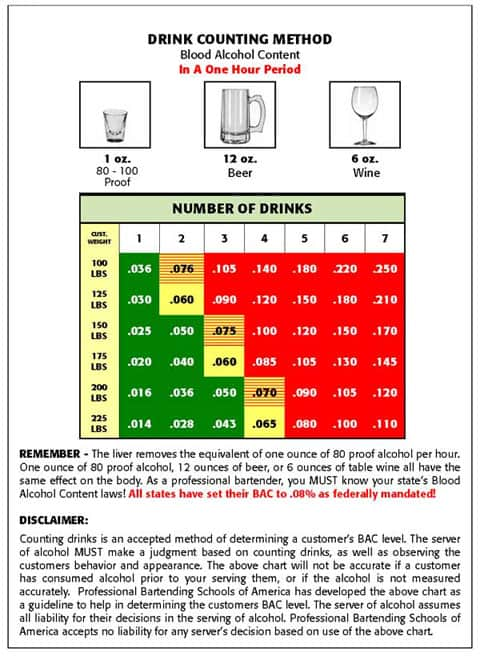
There’s no single answer because the rate at which alcohol is absorbed depends on many factors. Still, research shows that approximately four drinks in two hours can bring an average 180-pound male to a BAC of 0.08%. It can take fewer drinks for females or anyone with less body mass to reach this level.
A standard drink in the U.S. contains about 14 grams of pure alcohol, roughly equal to:
Of course, cocktails may include more alcohol than a typical glass of wine or beer. That’s why servers should never rely solely on drink counts.
Everyone processes alcohol differently. Many key variables influence BAC, including:
Servers should never assume someone is fine based on appearance alone. Behavioral changes and context matter more than perceived tolerance.
In the U.S., the maximum legal BAC for driving is 0.08%, though some jurisdictions set lower limits. Going above this threshold is illegal regardless of whether the individual exhibits visible signs of intoxication. Additionally, individuals under 21 cannot legally drive with any detectable alcohol in their system.
DUI laws for impaired driving are severe nationwide and carry heavy consequences, often resulting in an arrest. If an accident occurs, a driver may be charged with additional offenses. These can include fines, jail time, suspension of driving privileges and a criminal record.
Officers often use a breathalyzer test during roadside stops to check BAC. Failing the test or refusing it can lead to immediate penalties.
Most states prohibit open containers of alcohol in vehicles. These laws usually apply regardless of whether passengers are consuming the beverage, the container is placed in the back seat for transportation or even if the automobile is not in motion. Unsealed alcoholic drinks must be stored outside of reach, like within the car’s trunk.
Violating open container laws may lead to fines or citations. In some jurisdictions, an open container may serve as evidence in serious DUI cases. Many areas hold the driver responsible for open bottles, even if they weren’t drinking.
Some locations also prohibit individuals from drinking in public. In locations with these mandates, drinks must be consumed within designated areas only. Walking around with an alcoholic beverage may lead to a public intoxication citation.
If you work under these rules, customers who try to leave your premises with drinks in hand (for example, carrying a bottle or cup outside the premises) may be breaking state law — or at least putting themselves at risk in the event of a traffic stop or police inspection.
As a server, one of your duties is to prevent overservice. Because many establishments provide to-go drinks, here’s what you can do to discourage customers from leaving with open containers if they show signs of being intoxicated:
Staying firm, polite and informed can help you reduce the likelihood of someone violating open container laws or attempting to drive while under the influence.
Yes, they often can. Under many state dram shop laws, a server and their employer may be held accountable if they continue serving a visibly intoxicated guest who later causes injury, death or property damage while driving. If a customer leaves your establishment impaired, both you and your workplace could face fines and lawsuits.
Be proactive in your role as a server. Here are a few ways to help prevent situations stemming from an intoxicated patron:
By taking action, you can help stop liquor-related accidents from happening.
As a server, you have a duty to spot when a customer has had too much to drink. When a guest begins to show visible signs of intoxication, the first step is to cut service and help them sober up.
It takes time for the body to metabolize alcohol. However, you can follow specific steps to reduce risks:
These measures can reduce the likelihood of a customer trying to operate a motor vehicle while impaired.
Completing responsible beverage service training goes beyond meeting compliance rules. Programs like Texas Alcoholic Beverage Commission (TABC) training teach you about liquor laws and sharpen your ability to apply the lessons you’ve learned in real-world scenarios. Once you’ve completed an education course, you’ll be prepared to verify IDs, refuse service when necessary and know the signs of intoxication to look for so you can keep customers safe.
The science behind BAC translates into your daily responsibilities. Every time you pour a drink, you influence a person’s alcohol levels. Your choice to keep serving or cut someone off could determine whether they get home safely or face criminal charges after an accident.
Servers who master this knowledge stand out in the hospitality field. They are better equipped to make smart choices, intervene when necessary and help ensure that no one leaves in a condition where they could cause harm.
BAC is not just a number; it represents how alcohol impacts the physical human body and mind. As an alcohol seller or server, your actions matter. You play an essential part in ensuring that guests stay within safe limits. By keeping your training current and following alcohol consumption guidelines, you safeguard not just your guests, but the community at large.
The liver processes one drink per hour, on average. But this depends on weight, age and other factors. It can take several hours to complete alcohol metabolism.
Stay calm but firm. Offer to help schedule a safe ride, involve a manager or take their keys if necessary.
Not exactly. While servers can watch for signs, the exact number can only be determined by a breathalyzer, blood sample or urine test.
The chart below is used with permission from the Professional Bartending Schools of America. BAC charts are compiled using medical and scientific information.